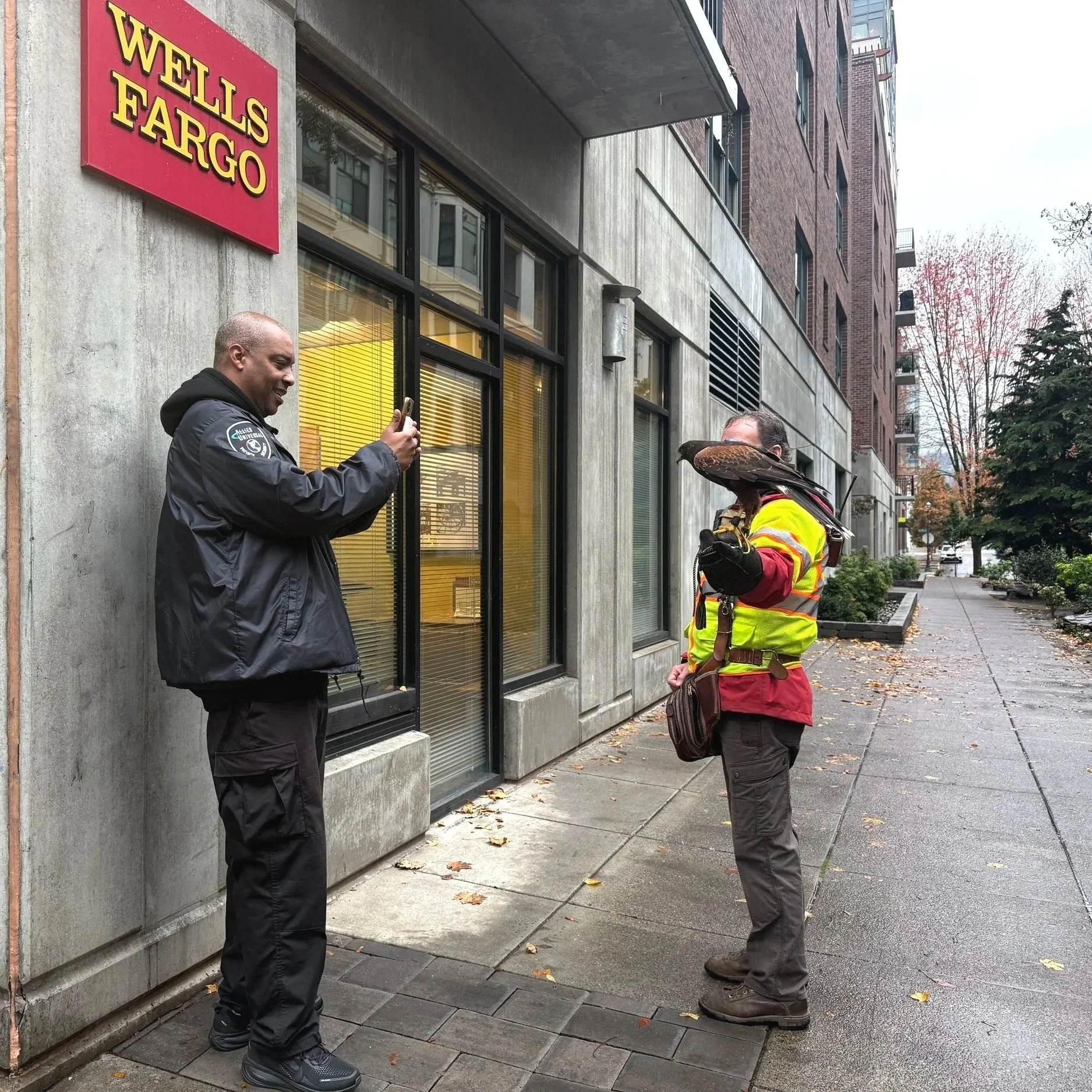
2026 Community Crow Abatement Program
The NWCC Crow Abatement Program is back in action!
The team is already touring the district, assessing crow populations and identifying where the birds are gathering and traveling.
Last year, we were fortunate to receive donations from several HOAs, private community members, and local businesses. Those contributions allowed us to run a very successful program, and we are hoping to build on that success this year.
As with last year, the program relies on donations because it benefits many properties throughout the district, including those that are not NWCC members.
Please consider talking with your HOA, neighbors, and fellow business owners about contributing to the program. The goal is humane displacement that helps keep the Pearl cleaner while also protecting the crows. Large congregations can result in significant property damage, including birds pulling at insulation and wiring for nesting materials, particularly as natural nesting habitat becomes harder to find.
Thank you in advance for considering a donation!
Thank you to all who attended our 2025 Community Crow Abatement Showcase. We’re grateful for the strong turnout and the community’s commitment to humane, wildlife-friendly solutions in the Pearl District.
Funds raised will directly support the ongoing implementation of NWCC’s crow abatement program, expanding falconry-based deterrence and community education efforts across Portland. This initiative not only reduces crow-related nuisances but promotes coexistence through a compassionate, effective, and natural solution.
NWCC’s Crow Abatement Program demonstrates how communities, businesses, and science can collaborate to protect shared spaces — ensuring Portland’s skies remain peaceful and its parks thriving.
Impact
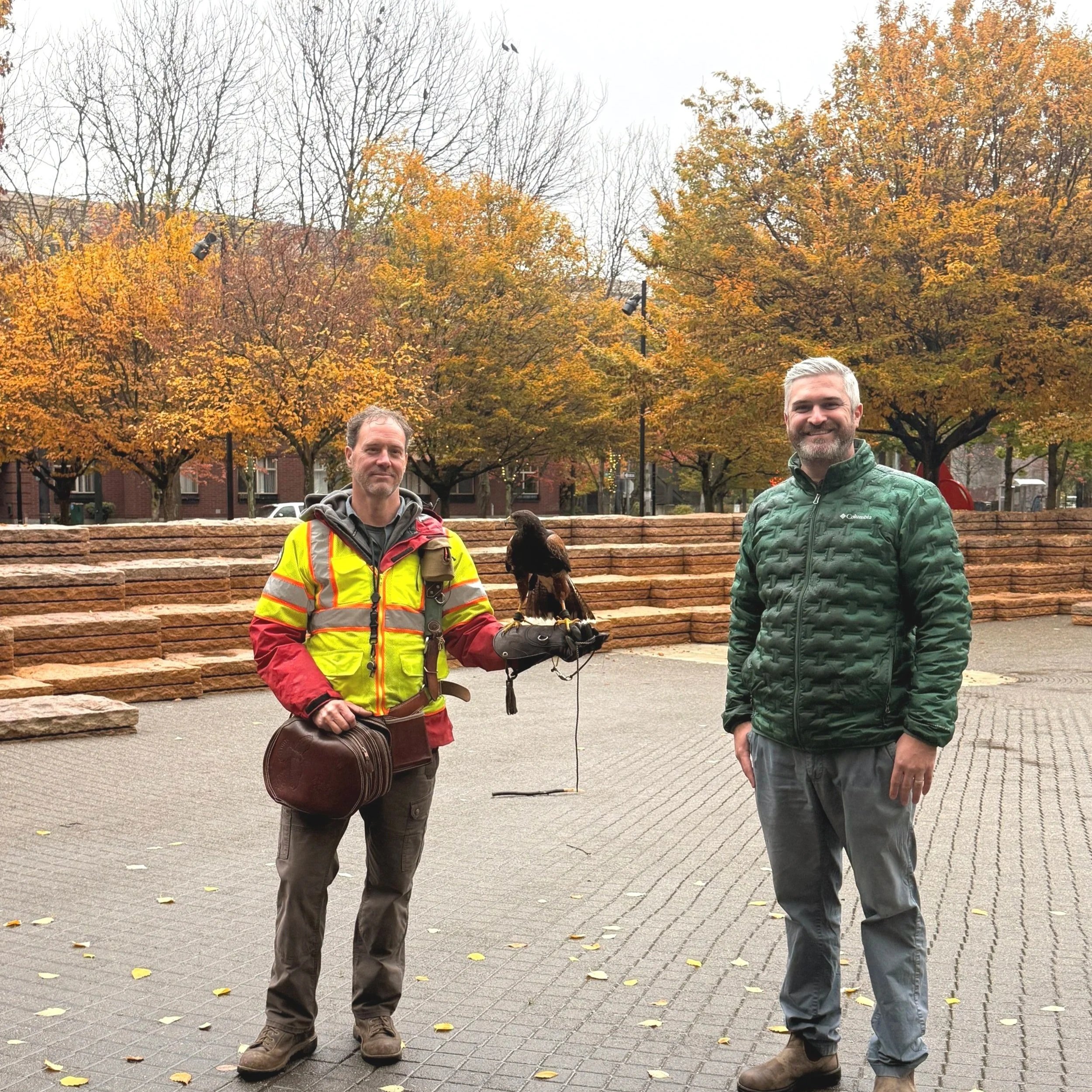
Kort Clayton of Integrated Avian Solutions and NWCC Executive Director, Chase McPherson a Harris’s hawk.
“The Harris Hawks used for hazing have no direct contact with the crows. The hawks simply do short flights in the vicinity of the crows to shift them towards more acceptable locations.”