
A Cautionary Tail: Chuck’s Close Calls
In the Pearl District, a local dog owner recounts how Chuck the labradoodle came frighteningly close to a life-threatening ordeal.
By Cynthia Ahr, Pearl District and NWCC Neighbor
Meet Chuck, my 90-pound Labradoodle with the heart of a clown and the wardrobe of an Irish Wolfhound. He’s six going on two, fueled by joy, fur, and an unshakable belief that every human he meets is carrying snacks. Chuck’s the kind of dog who remembers every shop that’s ever handed him a treat, and refuses to walk past without stopping. If this is a small business strategy, it’s working.
Our morning walks are our favorite ritual. Portland’s streets are filled with scents, squirrels, and the promise of adventure. But twice since moving here, that same curiosity nearly cost Chuck his life.
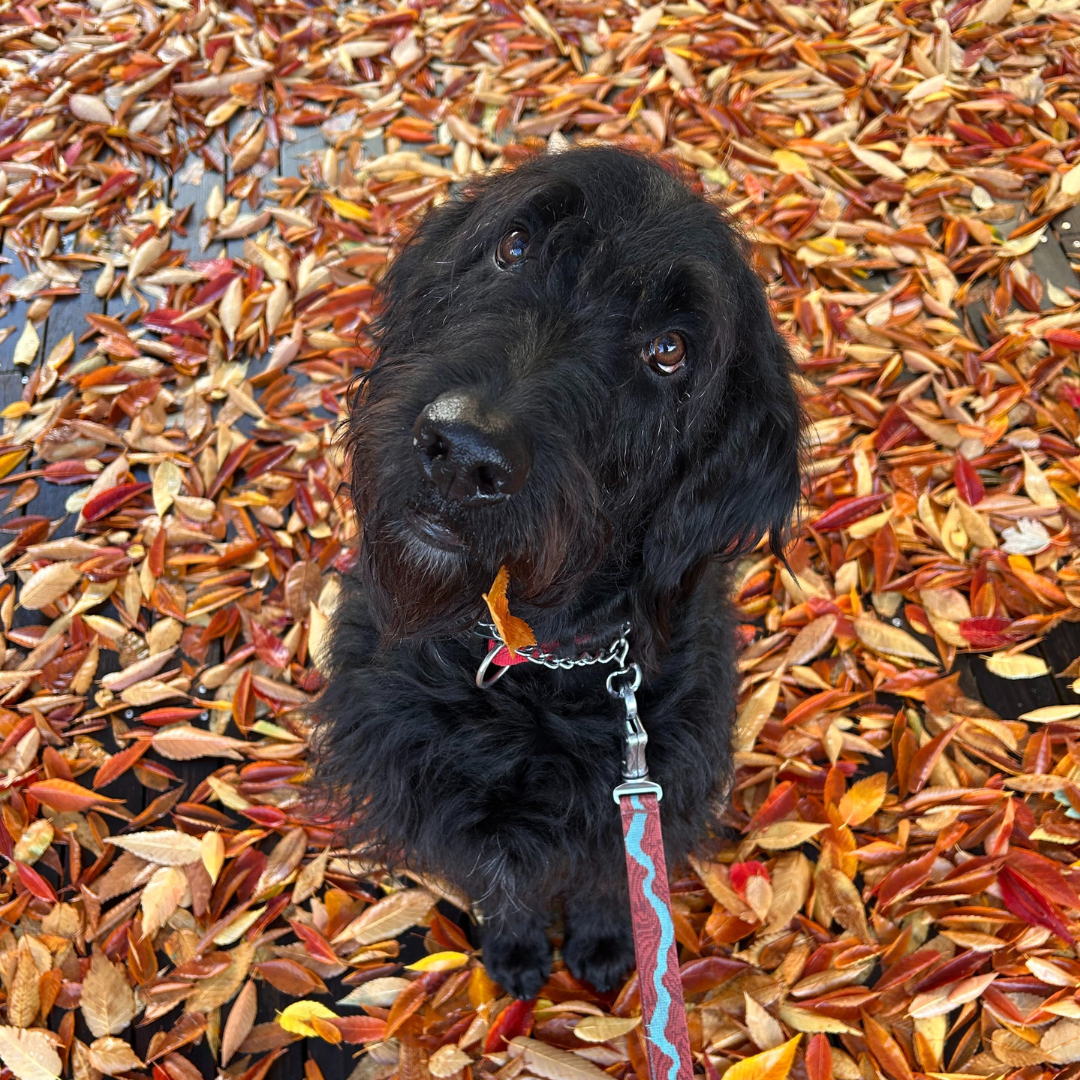
Chuck, enjoying a fall day in the Pearl District
The First Scare
It started like any other day, a long walk, a nap, and then something felt off. Chuck wasn’t responding to my voice. His normally bright, goofy eyes were dull and droopy. When I knelt to comfort him, he flinched, then began to jerk and stumble. His legs spread out like he couldn’t find the ground. I was sure he was having a stroke.
I rushed him to the nearest emergency vet, heart pounding. The technician came out, watched him for a moment, and asked gently, “Is there any chance he got into THC?”
“Absolutely not,” I said, certain. “My dog is having a stroke.”
Three minutes later, the clinician returned. Chuck wasn’t dying — he was high.
Apparently, dogs are extremely sensitive to THC, and it doesn’t take much (even the end of a discarded joint) to cause serious poisoning. There’s no antidote. You just ride it out. Chuck spent the next two days wobbling, leaking (yes, it’s a thing), and slowly coming back to himself. The vet bill came to just under $1,000, but I was too relieved to care.
Everyday Dangers on Our Streets
These days, I notice things differently. The small foil squares scattered in the park. The crumbled roaches near benches. The vape cartridges left on the sidewalk.
Portland’s drug crisis plays out in full view, and while there’s no easy fix, pet owners need to know that these remnants can be deadly to our companions. Fentanyl, for instance, is so potent that even trace residue can cause overdose in dogs, and unlike THC, it can be fatal within minutes.
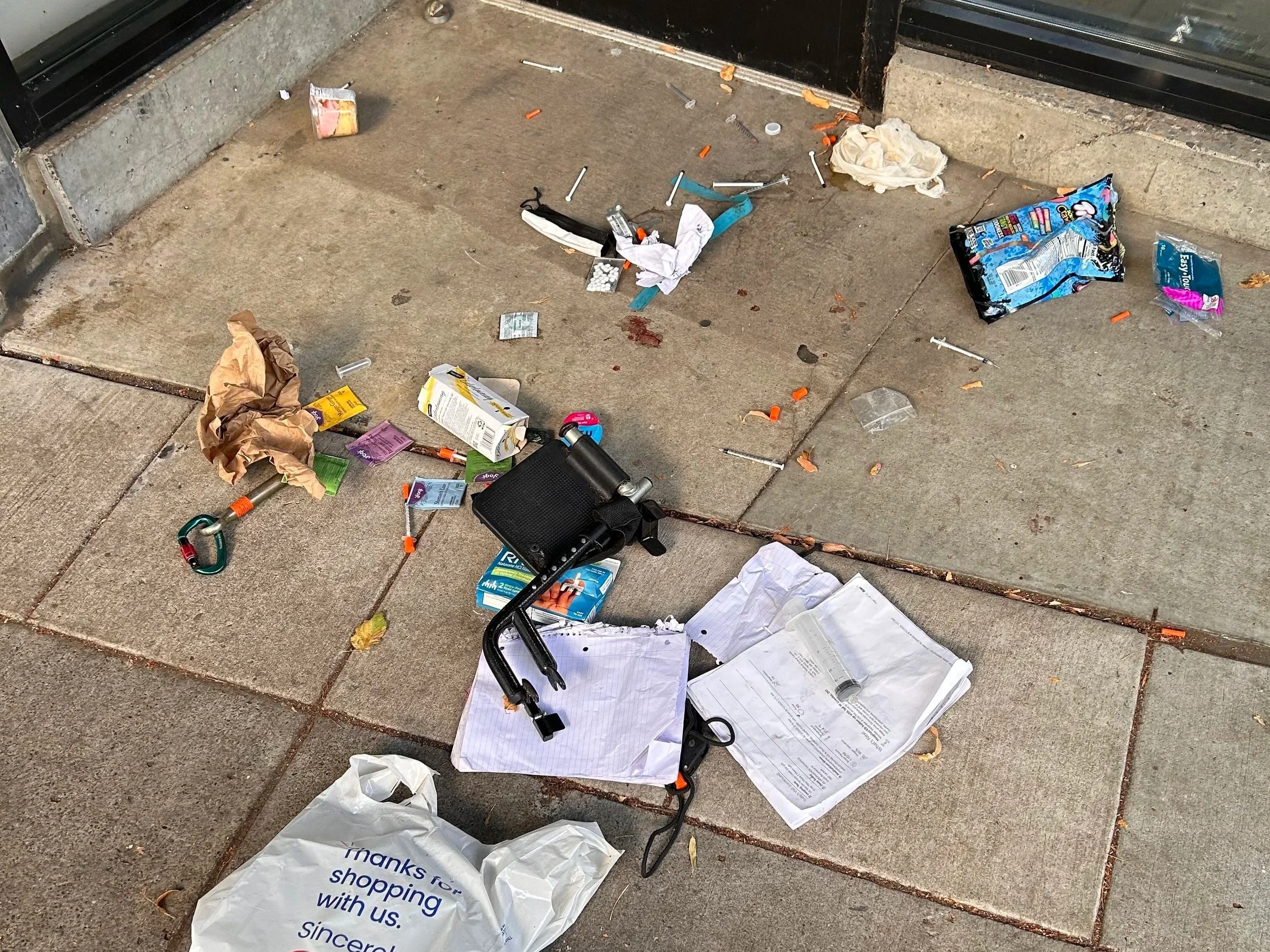
Drug paraphernalia on the streets.
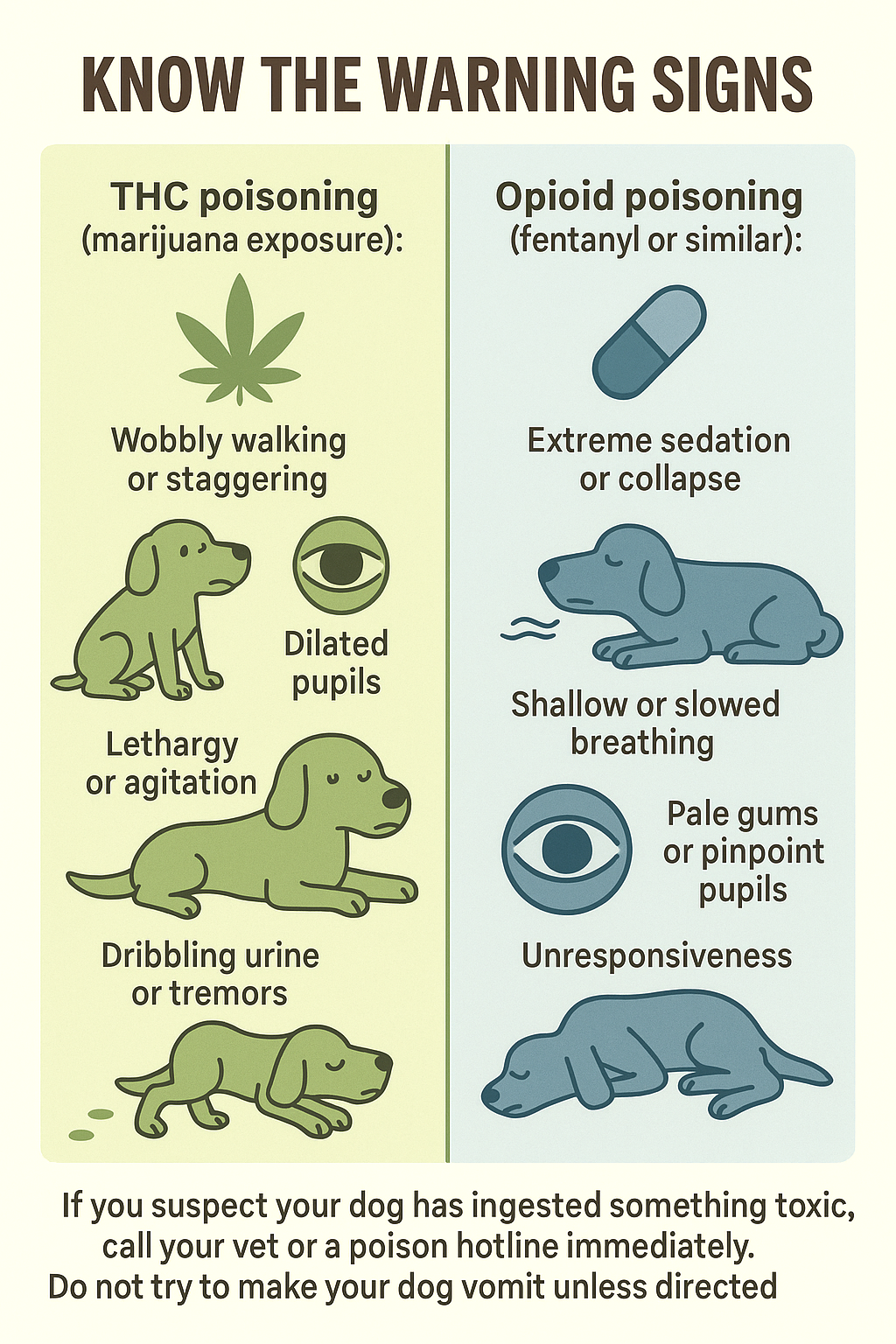
Know the Warning Signs
-THC poisoning (marijuana exposure):
- Wobbly walking or staggering
- Droopy or glassy eyes
- Dilated pupils
- Lethargy or agitation
- Dribbling urine or tremors
Opioid poisoning (fentanyl or similar):
- Extreme sedation or collapse
- Shallow or slowed breathing
- Pale gums or pinpoint pupils
- Unresponsiveness
If you suspect your dog has ingested something toxic, call your vet or a poison hotline immediately. Do not try to make your dog vomit unless directed by a professional.
What I Learned (and Why I Carry Narcan)
After the second scare, I did my homework. I learned to recognize the difference between THC toxicity and opioid poisoning, and I now carry Narcan — the same overdose-reversal spray used for humans — just in case.
Veterinarians confirm it’s safe for dogs, and it works fast. I hope I never have to use it, but I’d rather have it and not need it than face the alternative.
Learn more about Narcan: Multnomah County https://multco.us/info/overdose-prevention
How Common Is This?
The problem isn’t rare. DoveLewis Emergency Animal Hospital in NW Portland reported more than 200 pet cannabis poisonings a year soon after legalization — a number that continues to rise. Nationally, pet insurers have logged thousands of cases, with average treatment costs around $800.
While most dogs recover with supportive care, the fear, the expense, and the heartbreak can be avoided with a little extra vigilance.

What Pet Owners Can Do
1. Protect your pet: Keep your dog on a short lead near sidewalks, parks, or encampments.
2. Teach “leave it.” It’s the most valuable command you’ll ever use.
3. Pay attention to debris: Avoid foils, baggies, and roaches: assume they’re dangerous.
4. Carry Narcan if you walk in high-risk areas; ask your vet for guidance.
5. Share awareness: talk with other dog owners in the neighborhood.

A Final Word from Chuck
Chuck is back to his happy, treat-seeking self, although I watch him a little more closely now. He still sheds enough to clothe a small village and still believes every coffee shop exists for his entertainment.
Our dogs are part of what makes the Pearl District such a joyful, connected community. A little awareness and a quick glance at the ground can help keep it that way. If sharing Chuck’s story spares even one neighbor this experience, then this cautionary tail has done its job.

Resources
Emergency Care: DoveLewis Animal Hospital: (503) 228-7281
ASPCA Animal Poison Control: (888) 426-4435
Pet Poison Helpline: (855) 764-7661
Oregon Poison Center: (800) 222-1222
Narcan for Pets (VCA Guide): https://vcahospitals.com/know-your-pet/naloxone-for-dogs
Join the Movement: Be Part of Portland’s Progress
This progress is possible because of community commitment—people like you who believe in compassionate solutions and sustainable change.
To become a member, learn more, get involved, or support the NWCC’s outreach and advocacy, please reach out to:Chase McPherson, Executive Director at Chase@nwccpdx.com.
Every conversation, every act of generosity, and every partnership helps restore dignity to those in need and builds a safer, stronger Portland for all.
