
Acknowledging Sacrifice, Recognizing Current Hardships: Veteran Housing Instability
“This Memorial Day, we honor and remember the brave men and women who gave their lives in service to our country. As we reflect on their sacrifice, let’s also remember the veterans in our community who may still need support, connection, housing, or care. Helping our veterans is one small way we can continue to honor their service beyond just one day. Thank you to all who have served and sacrificed.”
— Chase McPherson, Executive Director, NWCC
Memorial Day serves as a solemn tribute to those who perished in service. Yet it also calls attention to the ongoing struggles of those who returned. For many thousands of American veterans, a history of service is now paired with the vulnerability of sleeping in vehicles, encampments, or emergency shelters.
According to the most recent federal Point-in-Time count data available from January 2024, about 32,800 veterans were experiencing homelessness nationwide, representing just over 5% of all adults experiencing homelessness in the United States. Over the course of a year, that number is higher as people move in and out of temporary shelter, unsafe living situations, and homelessness. Every statistic represents a former service member who once volunteered to serve but now lacks a secure place to sleep.
A large national study of homeless veterans found that about 63% were living with a diagnosed mental health disorder, and roughly a quarter had both a mental health and a substance use disorder. These conditions often include PTSD, depression, and anxiety, and they frequently overlap with traumatic brain injuries, substance use, and chronic physical pain. Such complexities can create significant hurdles to maintaining employment, navigating benefits systems, and sustaining the personal relationships that often provide a social safety net.
In Oregon, this national trend is especially visible. State sources estimate that roughly 1,400 veterans experience homelessness on any given night. Local organizations report that veterans in Oregon are between two and three-and-a-half times more likely to experience homelessness than civilians, and veterans of color are overrepresented within Oregon’s unhoused veteran community. These disparities reflect broader patterns of inequity within both housing systems and veteran support systems.
These challenges persist within a broader regional crisis in housing and behavioral health. In Oregon and the Portland area, rents and home prices have continued to rise faster than incomes, while the state faces a severe shortage of homes affordable and available to renters with the lowest incomes. This mismatch leaves more households at risk of instability and lengthens waitlists for affordable housing assistance. At the same time, statewide analyses show that many Oregon veterans struggle to access timely mental health and addiction treatment because of appointment delays, limited provider availability, transportation barriers, and stigma around seeking care. As a result, many veterans carry the invisible burden of trauma while confronting systemic barriers to stability, treatment, and recovery.
While ceremonial parades and flags provide one way to express gratitude, true respect for service requires action. Genuine support means ensuring that no veteran is forced to choose between paying for essential treatment and keeping a roof overhead, or between a hospital discharge and a sidewalk.
At NWCC, remembrance should translate into action. That includes supporting policies that expand behavioral health access and assisting local veteran service organizations. It also means listening to the specific needs of unhoused veterans and helping dismantle the stigma that prevents many from pursuing care.
This Memorial Day, while honoring those who were lost, the commitment must also extend to the veterans living on neighborhood streets, in shelters, and in vehicles in our community. Their experiences are part of the national story, and so is the obligation to ensure that gratitude is matched by tangible pathways toward shelter, healing, and recovery.
Thank you to our partners at Portland Solutions for connecting us to these important resources provided by the Community Resource and Referral Center (CRRC - also known as "Portland Clinic").
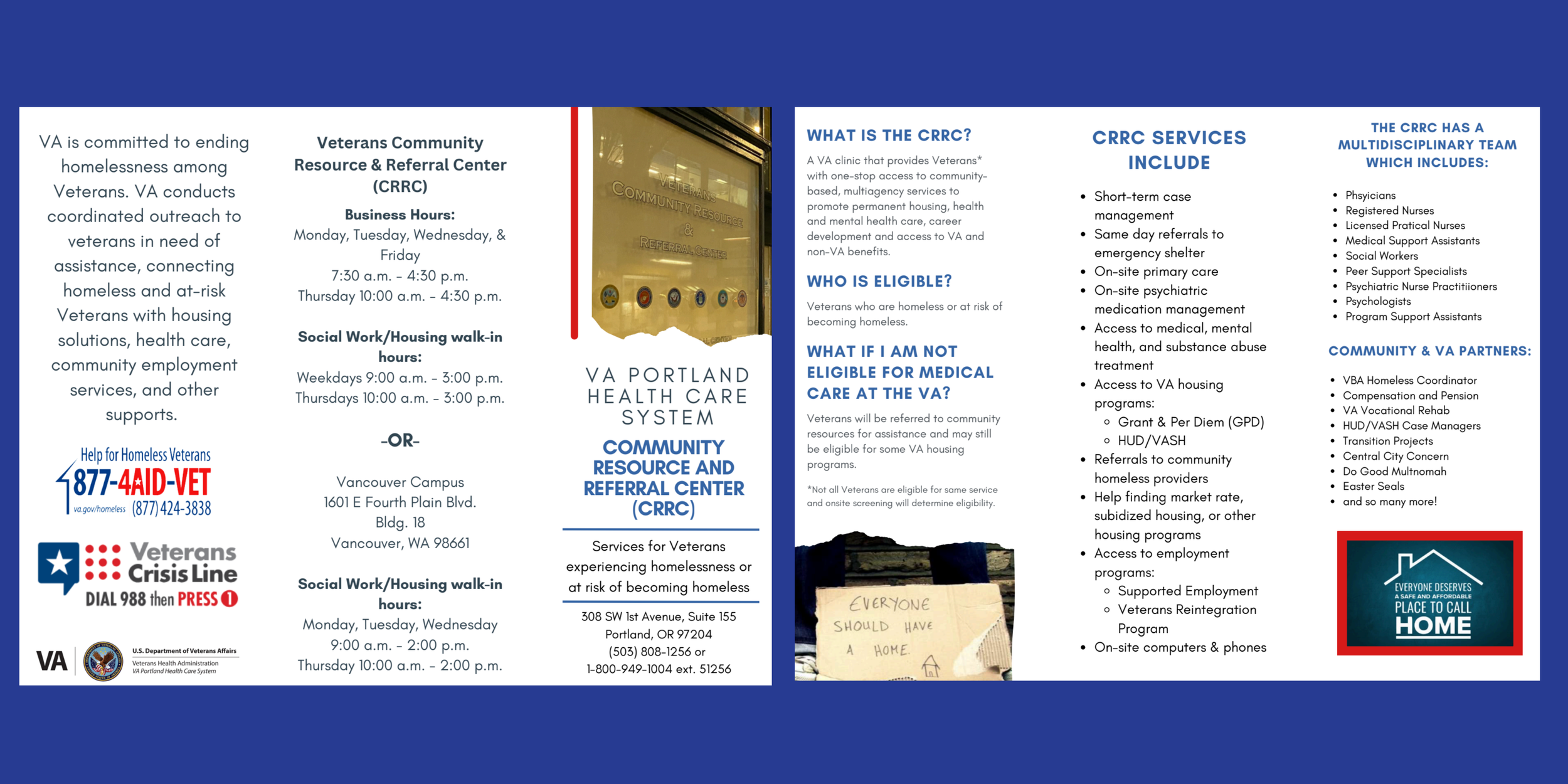
Click here to download the pamphlet.
Sources
National Coalition for Homeless Veterans, “Veteran Homelessness”
U.S. Department of Veterans Affairs, “Point-in-Time (PIT) Count”
Oregon Department of Veterans’ Affairs, “Homeless Veterans”
Do Good Multnomah, “Why Veterans?” and National Alliance to End Homelessness, “People of Color Make Up a Much Larger Share of the Homeless Veteran Population Than the General Veteran Population”
Oregon State Legislature, “Increasing Access and Use of Healthcare for Veterans”
Oregon Health Authority, “Veterans Behavioral Health Services Improvement Study Report”
PubMed Central, “Trends in Homelessness and Social Sustainability: Veterans vs. Non-Veterans”
